
Introducing Qualitative Data Analysis with Nvivo
After several interviews, the problem is often preserving emerging ideas across a growing body of material. Pat Bazeley and Kristi Jackson’s Qualitative Data Analysis with NVivo (2013) places software within that developing analytical process, rather than reducing it to text tagging.
Start reading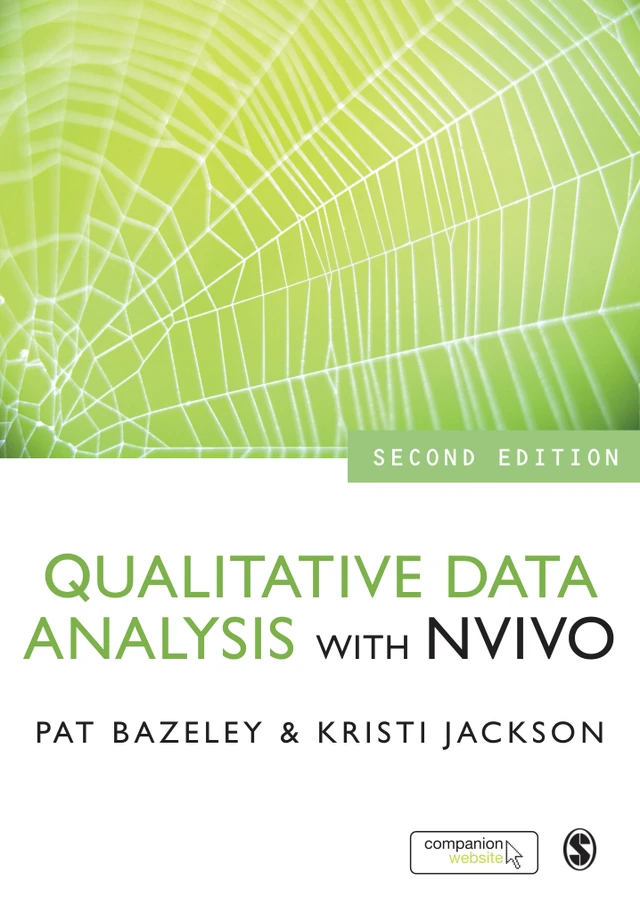
Qualitative Data Analysis with NVivo
SAGE · Second edition · 2013 · EnglishISBN 9781446256565Original book cover; the language and edition are identified alongside it.
Keep the route back to the data
Early coverage addresses qualitative computing, project beginnings, database design and coding, including cases, sources, memos, annotations and links. These components serve different purposes: collecting material, preserving interpretive reasoning and maintaining participant context.
A tidy project can still be analytically weak when those connections are absent. Read the organizational sections before the code list becomes too large, even if you already know several commands.
Practice one complete analytical cycle
Keep the research question visible while classifying material. Existing projects can be reviewed for distinctions among sources, cases and attributes, which may matter for later comparisons.
Exercise created by Lê Minh: code a theme across several illustrative excerpts, write a memo explaining the grouping and retain the original context. Then examine an excerpt that does not fit comfortably. Consider whether the theme’s definition should change. The exercise is for learning, not an empirical finding.
In a team, compare interpretive reasons before comparing code counts. Agreement is not automatically the sole quality criterion; assessment must fit the project’s methodological orientation.
Edition and related books
This is the 2013 second edition by Bazeley and Jackson, not Woolf and Silver’s Five-Level QDA book. The latter focuses on translating purposes into tools; this volume can accompany the organization and development of a data-rich project. Its interface examples need checking against current NVivo versions. The lasting goal is an analytical record that shows how interpretation developed from the material, rather than merely naming the software used.
Choose a companion reading
Continue with: Qualitative Analysis Using NVivo (First edition · English).
Source and edition
Bazeley, P., & Jackson, K. (2013). Qualitative data analysis with NVivo (2nd ed.). SAGE.